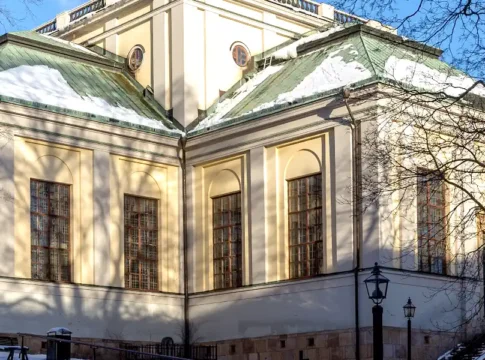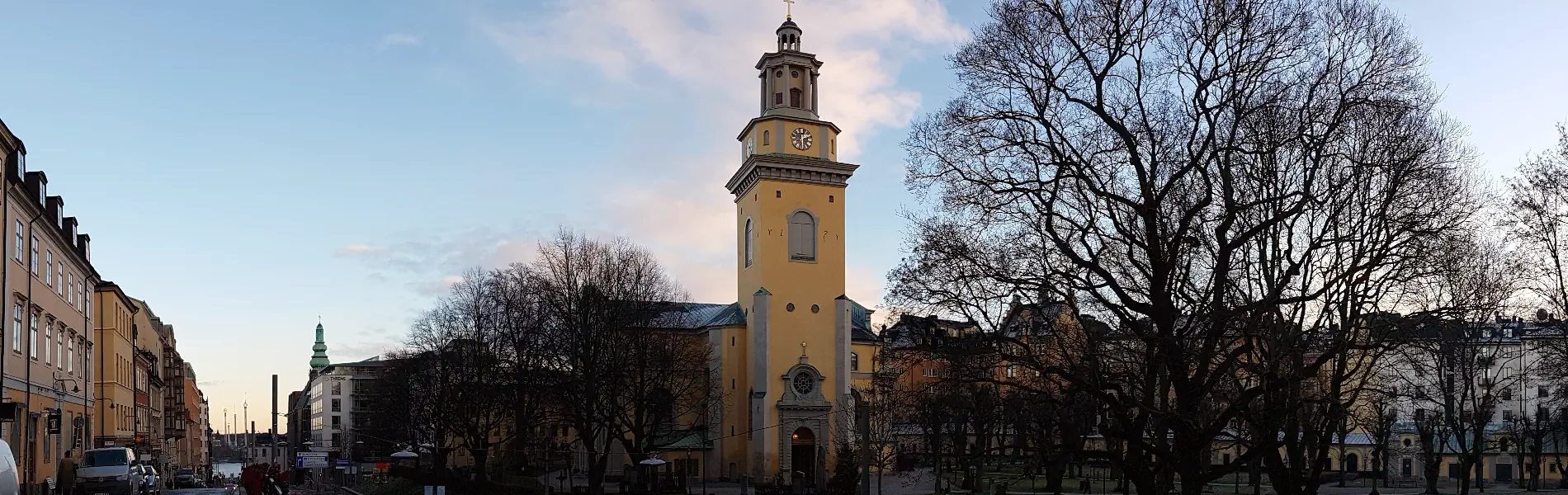
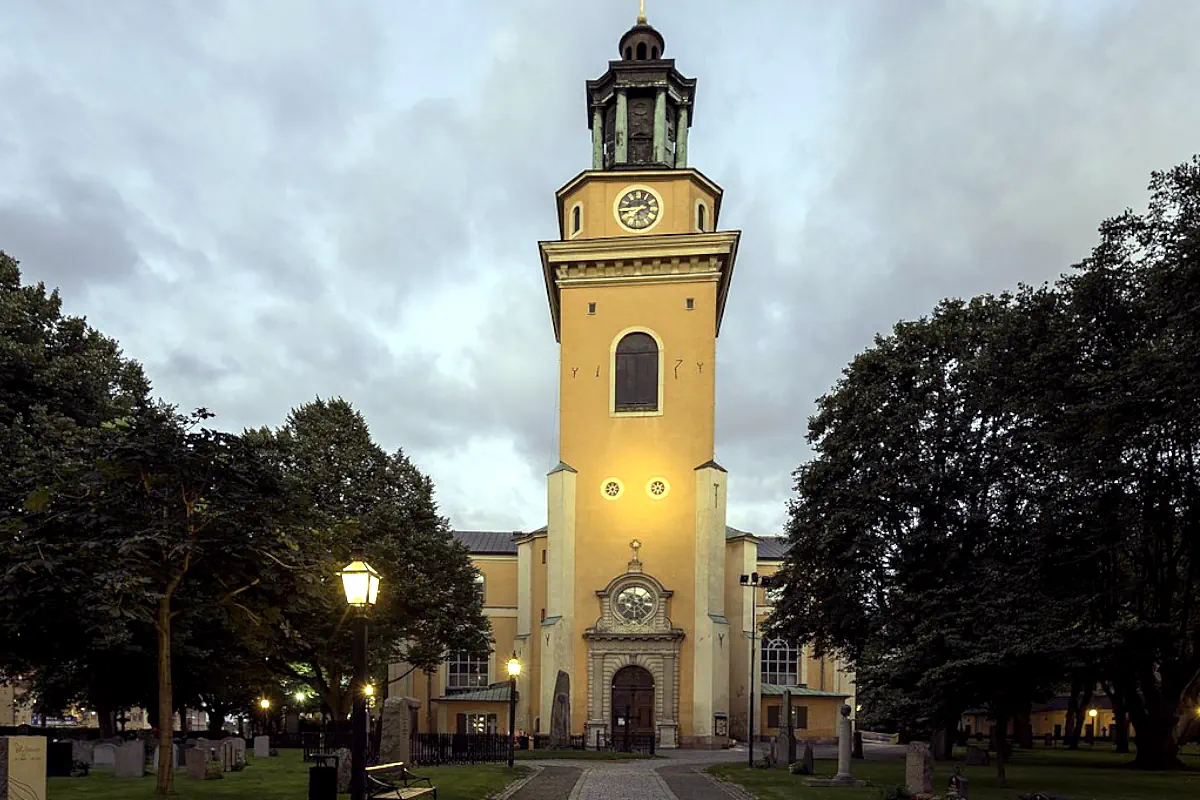
Maria Magdalena Church is a Baroque church on Södermalm, originally built in the late 16th century. Known for its Rococo interior and elevated setting, it has long been an important religious and cultural landmark.
Maria Magdalena Church: Stockholm’s Historical Masterpiece
In the heart of Södermalm, Maria Magdalena Church (S:ta Maria Magdalena kyrka) is one of the district’s oldest parish churches, shaped by centuries of fire, rebuilding, and musical tradition. Known for its elegant design and rich history, it has long been a cornerstone of Stockholm’s cultural heritage, drawing visitors from near and far.
- Origins: Built in the late 16th century
- Completed: 1635, later rebuilt after fire (1759)
- Style: Baroque with Rococo interior elements
- Setting: Södermalm, near Slussen
- Features: Historic organ and musical tradition
- Identity: Historic parish church of Södermalm
About Maria Magdalena Church
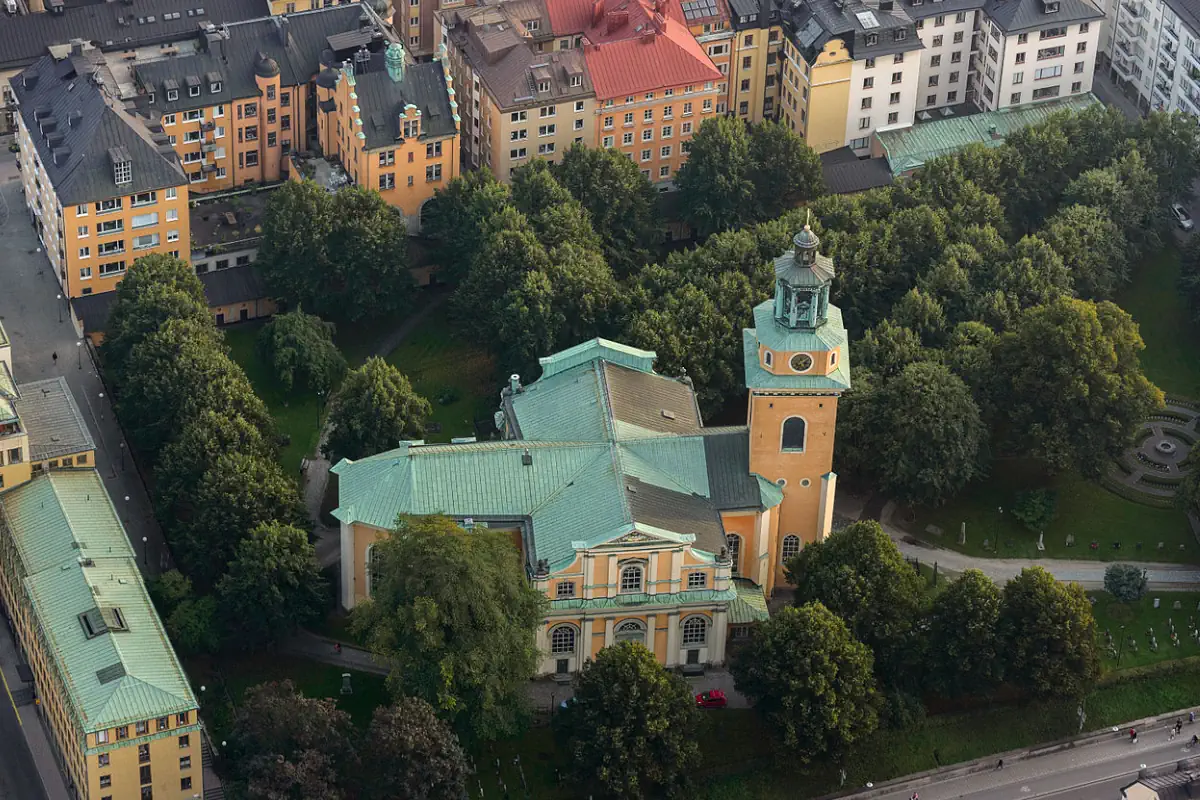
Often called simply Maria Church, this landmark sits along Hornsgatan, between Mariatorget and Slussen in Södermalm. Dedicated to Saint Mary Magdalene, it serves the Maria Magdalena parish in the Diocese of Stockholm and is recognized as a protected cultural heritage site.
Origins and Development
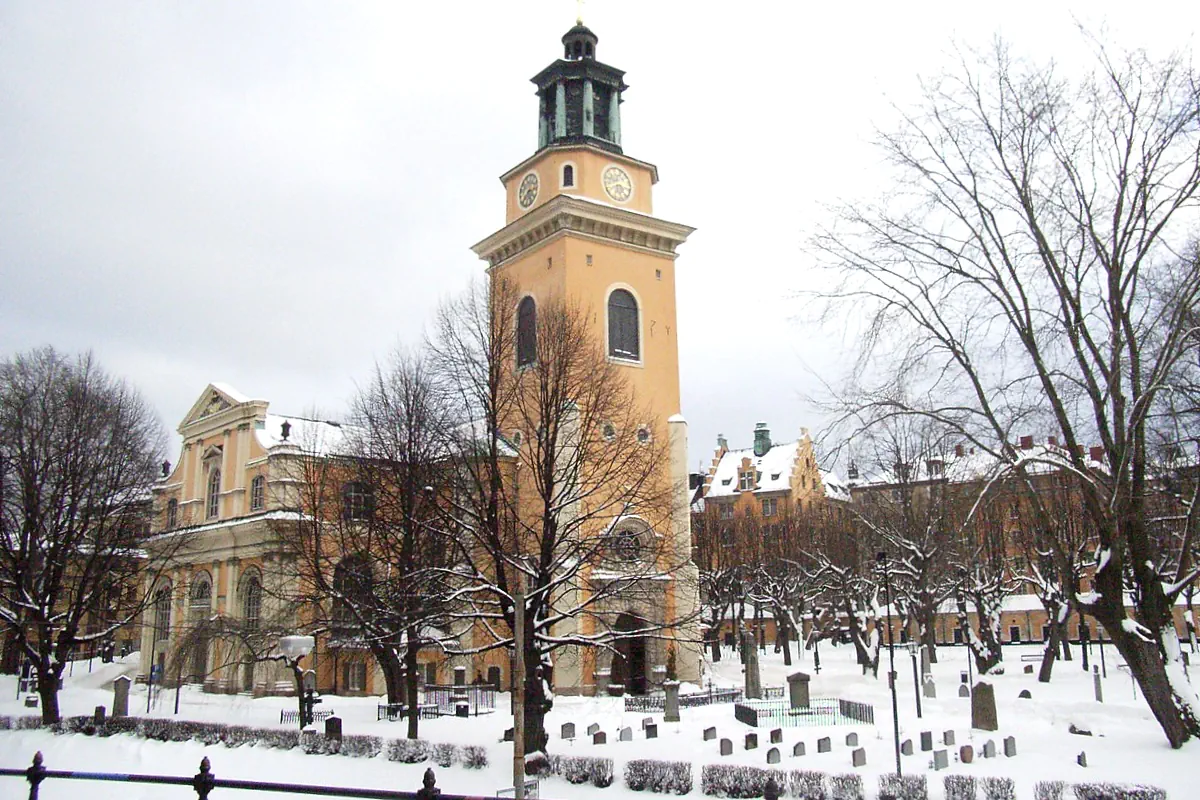
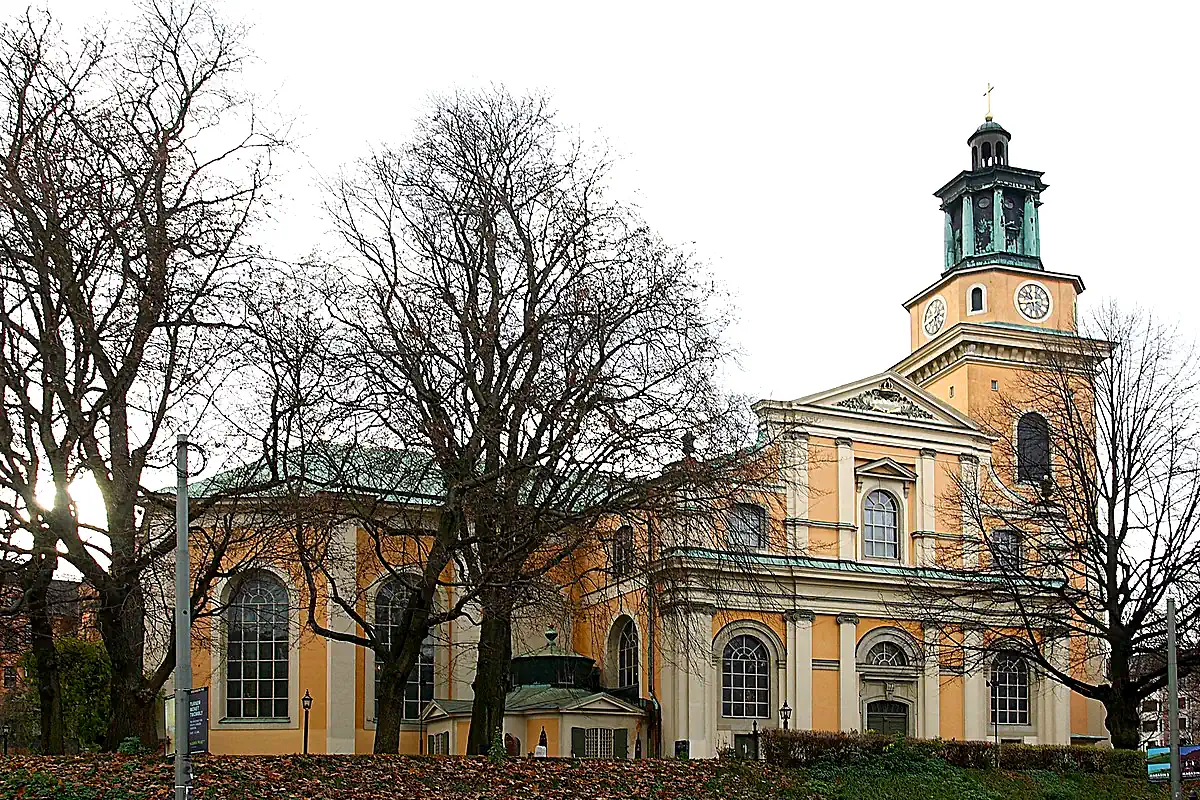
Construction began in the late 1500s and was completed in 1635, though the church has been reshaped many times. Notably, Nicodemus Tessin the Elder added 17th-century extensions, while Carl Johan Cronstedt oversaw reconstruction after a devastating fire in 1759, giving the church much of its present appearance.
Architectural Features
The architecture blends Baroque and Rococo influences, with a slender spire designed by Tessin the Younger. Inside, Rococo renovations by Cronstedt introduced elegant furnishings and refined artistry.
Highlights include:
– An altarpiece of the *Adoration of the Shepherds* by Louis Masreliez (c. 1800)
– A yellow-plastered exterior with red sandstone base and copper roof
– Brass chandeliers and wall fixtures dating back to the 17th century
– A pink textile aisle runner complementing the gray wooden floor
Organ and Music Tradition
Maria Magdalena is home to one of Sweden’s largest late-Romantic organs, originally built in 1878 and expanded over time. The parish maintains a deep musical tradition with records of organists dating back to 1641. Today, the church regularly hosts concerts that attract both locals and international visitors.
Legacy and Burial Ground
Surrounding the church is a historic cemetery dating back to the 1350s. It includes the graves of poets Evert Taube and Erik Johan Stagnelius, as well as actor Gösta Krantz. This centuries-old burial ground offers visitors a poignant connection to Sweden’s cultural history.
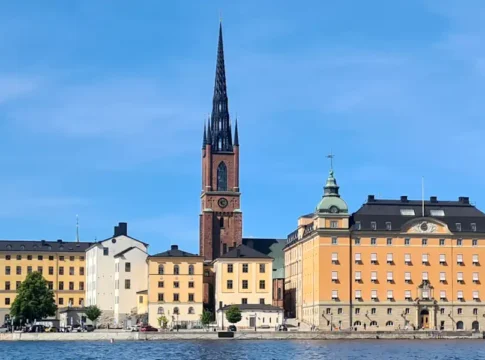
Similar to Maria Magdalena Church, Katarina Church’s baroque details highlight the rich architectural heritage found throughout Södermalm.
Nearby Attractions Around Maria Magdalena Church
Enhance your visit to the church by exploring Södermalm’s vibrant surroundings:
- Södermalm — A lively district of cafés, shops, and restaurants with a bohemian vibe.
- Monteliusvägen — A scenic path offering panoramic views of Gamla Stan and the Stockholm archipelago.
- Fotografiska — A world-renowned photography museum with exhibitions from Swedish and international artists.
- Skinnarviksberget — One of Stockholm’s highest natural viewpoints, perfect for sunsets over the city skyline.
- Medborgarplatsen — A bustling square lined with cafés, bars, and shops, great for people-watching after your visit.
All within walking distance, these attractions combine cultural, scenic, and social experiences to complement a visit to Maria Magdalena Church.
Explore Churches in Central Stockholm
 In partnership with Agoda