

 Photo: © StockholmMuseum.com
Royal Swedish Opera: Stockholm’s Grand Stage Since 1773
Explore the Royal Swedish Opera's grandeur and rich history dating back to 1773. Dive into this cultural gem, the heartbeat…

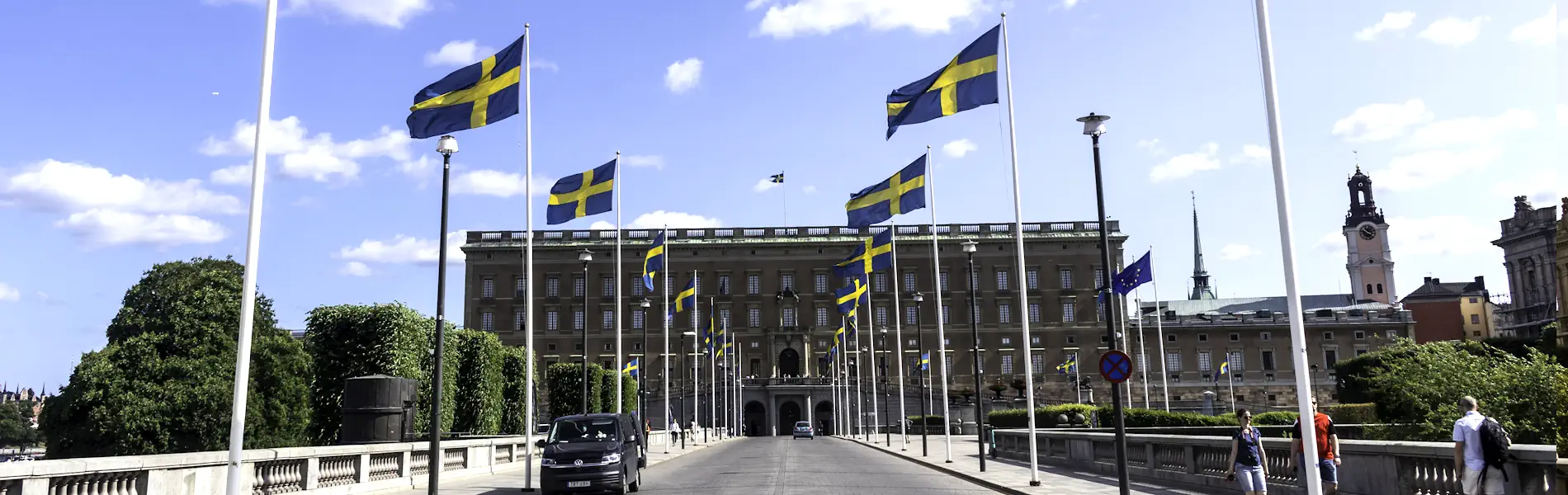
Explore Royal Stockholm through its historic palaces and royal landmarks, from Tre Kronor Castle and the Royal Palace to Drottningholm Palace and Riddarholmen Church.
Stockholm’s royal landmarks tell the story of how Sweden evolved from a medieval kingdom into a modern constitutional monarchy. From fortified castles rising above the narrow streets of Gamla Stan to the grand royal estates on the shores of Lake Mälaren, the city preserves a remarkable architectural record of royal authority and court culture.
For centuries, Sweden’s monarchs governed the realm from Stockholm. Royal fortresses defended trade routes, palaces hosted diplomats and ceremonies, and dynastic churches preserved the memory of kings and queens. Together, these landmarks form a historical landscape that reveals how monarchy shaped the development of the Swedish state.
Today, many of these sites remain open to visitors, offering a rare opportunity to explore the architecture, rituals, and cultural traditions that defined Sweden’s royal history.
The royal story of Stockholm begins in the 13th century, when the fortified settlement that became Gamla Stan emerged on the island of Stadsholmen. Its strategic position between Lake Mälaren and the Baltic Sea allowed whoever controlled the site to regulate trade and maritime access to the Swedish interior.
During this period, Sweden’s rulers consolidated authority over the growing kingdom. The early city served not only as a commercial hub but also as a political center where royal administration, defense, and religion intersected.
Narrow medieval streets, stone churches, and fortified structures gradually transformed the island into the heart of royal power in Sweden.
For centuries, the dominant royal structure in Stockholm was the fortress known as Tre Kronor Castle. Rising above the northern edge of Gamla Stan, this medieval stronghold symbolized the authority of the Swedish crown.
Originally built as a defensive castle, Tre Kronor gradually evolved into a royal residence and administrative center. From within its walls, monarchs governed the kingdom, received envoys, and protected the strategic gateway between Lake Mälaren and the Baltic Sea.
The castle also witnessed dramatic historical events, including the turbulent period surrounding the Stockholm Bloodbath of 1520, which ultimately led to the rise of Gustav Vasa and the establishment of an independent Swedish monarchy.
Although Tre Kronor was destroyed by fire in 1697, its foundations still survive beneath the palace that replaced it.
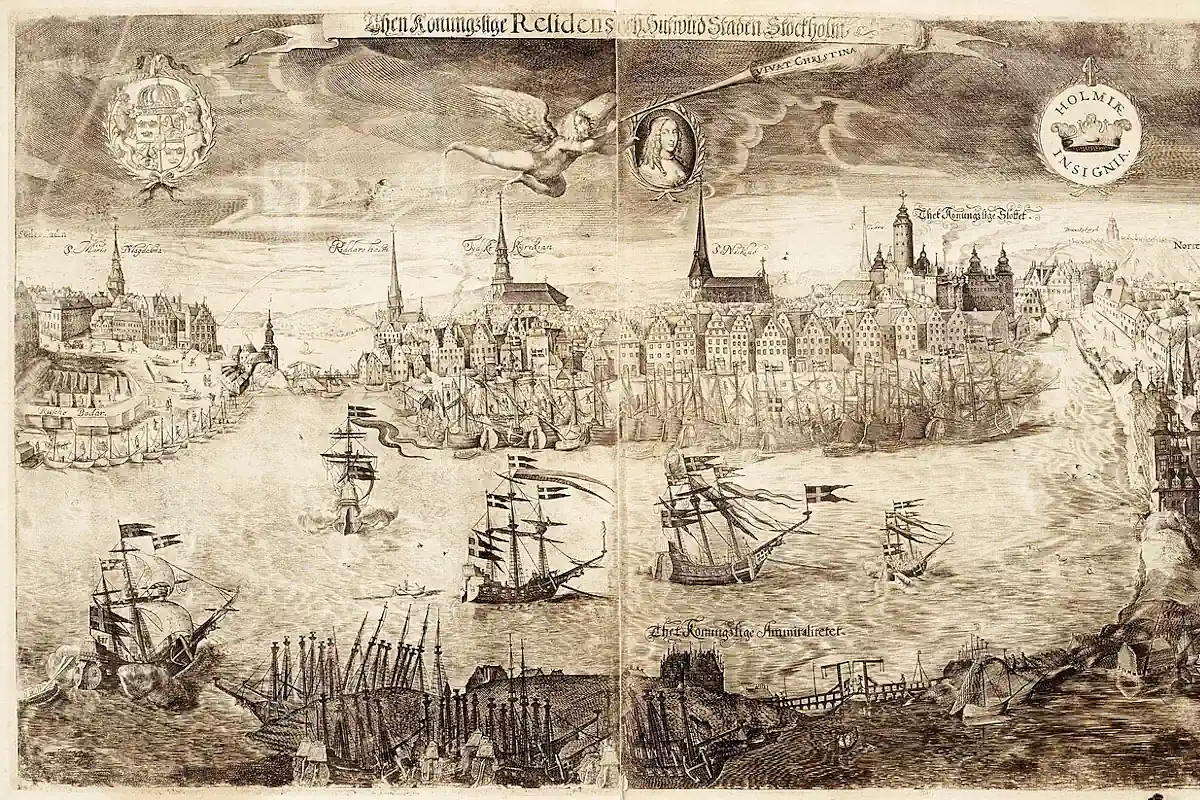
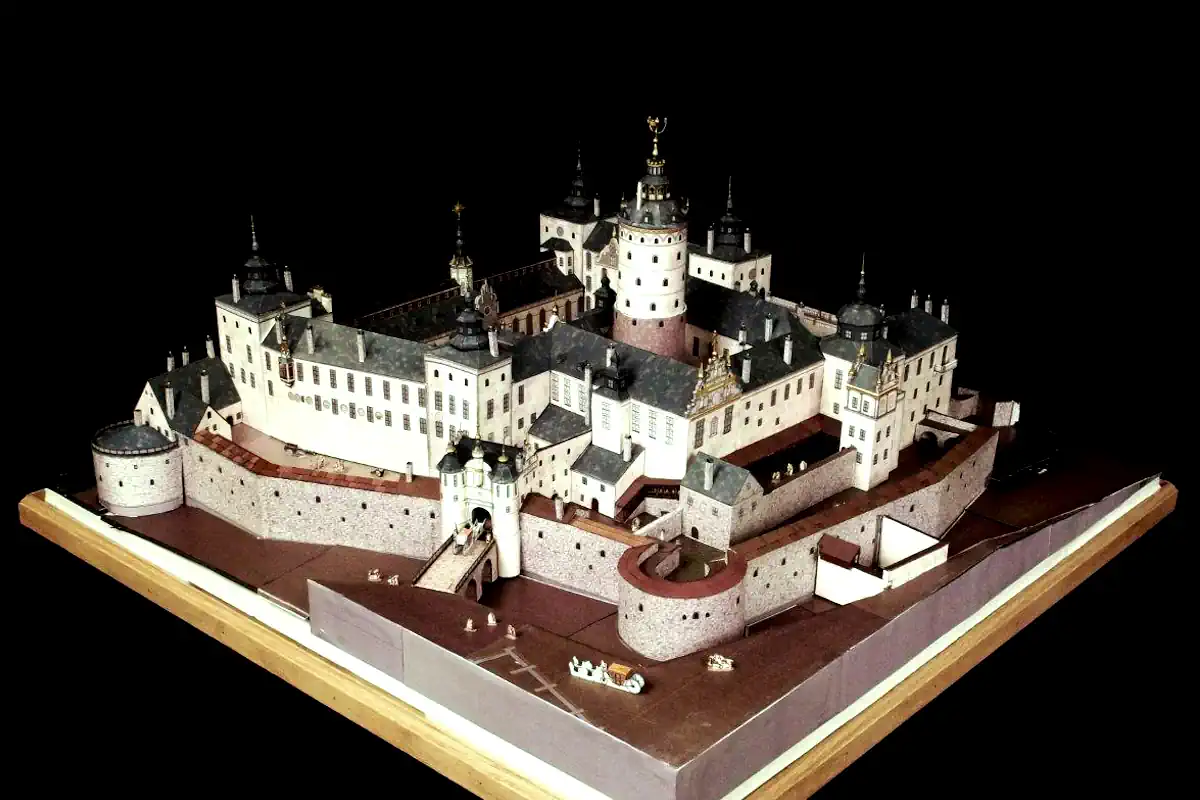
Following the destruction of Tre Kronor, the Swedish crown constructed the monumental Royal Palace that dominates Gamla Stan today. Designed by architect Nicodemus Tessin the Younger, the Baroque palace symbolized the growing power of Sweden as a European state during the 17th and 18th centuries.
For more than three centuries, monarchs from Gustav Vasa to Karl XIV Johan have shaped the palace’s ceremonial and political role.
With more than 600 rooms across eleven floors, the palace became the ceremonial heart of the monarchy. State apartments, grand halls, and royal chapels provided the setting for diplomatic receptions, royal ceremonies, and official audiences.
Today the Royal Palace continues to serve as the formal workplace of the Swedish monarch, while several sections — including the Royal Apartments, the Treasury, and the Tre Kronor Museum — remain open to the public.
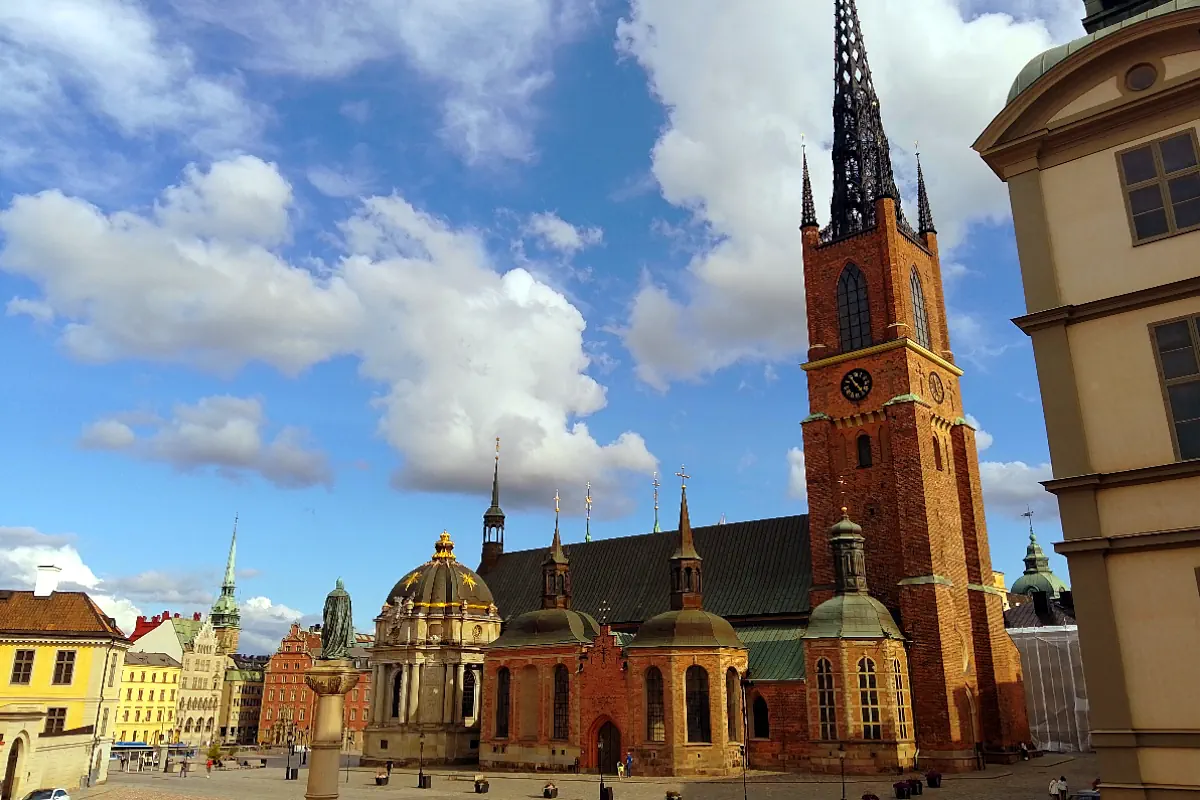
Just west of the Royal Palace stands Riddarholmen Church, one of the most historically significant royal monuments in Sweden. For centuries this Gothic church served as the burial site of Swedish monarchs.
Beginning with King Gustav II Adolf in the 17th century, generations of kings and queens were laid to rest here. Among those buried here are Karl XI, Karl XII, Karl XIII, and Karl XIV Johan, whose tombs trace the transition from the age of empire to the modern Bernadotte dynasty. The church therefore preserves a remarkable dynastic record of Sweden’s royal lineage.
Its distinctive iron spire rising above Riddarholmen island has become one of Stockholm’s most recognizable historic silhouettes.

While the Royal Palace represents ceremonial authority, the private life of Sweden’s monarchy unfolds at Drottningholm Palace, located west of Stockholm on the island of Lovön.
Constructed in the late 17th century, Drottningholm is Sweden’s most complete royal estate and was designated the country’s first UNESCO World Heritage Site in 1991. The complex includes the Baroque palace, extensive formal gardens, the Chinese Pavilion, and the remarkable Drottningholm Court Theatre.
Today the palace serves as the private residence of the Swedish royal family while much of the estate remains open to visitors.
The harmonious relationship between architecture, landscape, and royal culture makes Drottningholm one of Northern Europe’s most extraordinary royal environments.


Royal patronage has shaped much of Stockholm’s architectural and cultural heritage. Kings and queens commissioned palaces, theatres, gardens, and ceremonial spaces that reflected the ideals of their time.
One example is Gustav III’s Pavilion in Haga Park, a neoclassical retreat built for one of Sweden’s most culturally influential monarchs. During the 18th century, Gustav III fostered a flourishing court culture that emphasized theatre, art, and architecture.
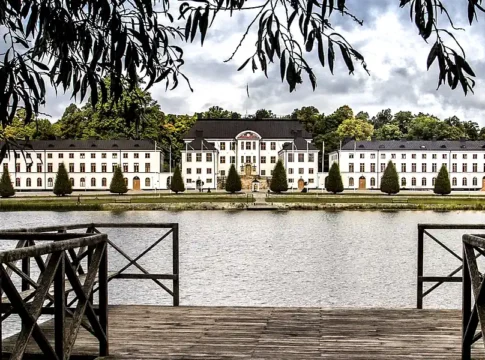
Later monarchs continued to shape the city’s royal landscape. Karl XIV Johan left his mark on residences such as Rosersberg and Karlberg, while the 19th century introduced new ceremonial traditions that still define the monarchy today.
Across the city, these monuments illustrate how royal ambition and artistic patronage helped transform Stockholm into a capital of European cultural life.
Many of these monuments are also featured in our guide to Stockholm architectural landmarks.
Stockholm’s royal landmarks are inseparable from the monarchs who shaped them. Across palaces, churches, and ceremonial spaces, the city preserves the legacy of Sweden’s great dynasties — from the medieval Vasa kings to the Bernadotte family that still reigns today.
The Vasa Dynasty (1523–1654):
Beginning with Gustav Vasa, this dynasty transformed Sweden into a unified kingdom and established Stockholm as the political heart of the realm.
The Palatinate and Holstein-Gottorp Dynasties (1654–1818):
These houses oversaw the rise of Sweden as a European power. Monarchs such as Karl XI and Karl XII left lasting marks on Stockholm’s military and architectural landscape.
The Gustavian Era:
Under Gustav III and his son Gustav IV Adolf, Stockholm became a center of theatre, diplomacy, and Enlightenment culture.
The Bernadotte Dynasty (1818–present):
A new chapter began with Karl XIV Johan, the former French marshal who became King of Sweden and Norway. His reign brought stability after decades of upheaval and laid the foundation for the modern monarchy. The dynasty’s reform era began under Oscar I, whose progressive policies and social reforms helped shape the foundations of the modern Swedish state.
The dynasty continues today, with many of its traditions rooted in the palaces and churches of Stockholm.
The modern history of Royal Stockholm is inseparable from the Bernadotte dynasty, whose reign reshaped the monarchy, the capital, and the identity of Sweden itself. From the cautious consolidation of power under Karl XIV Johan to the diplomatic modernity of Oscar II, the 19th century marked a period of reform, cultural vitality, and profound political transformation.
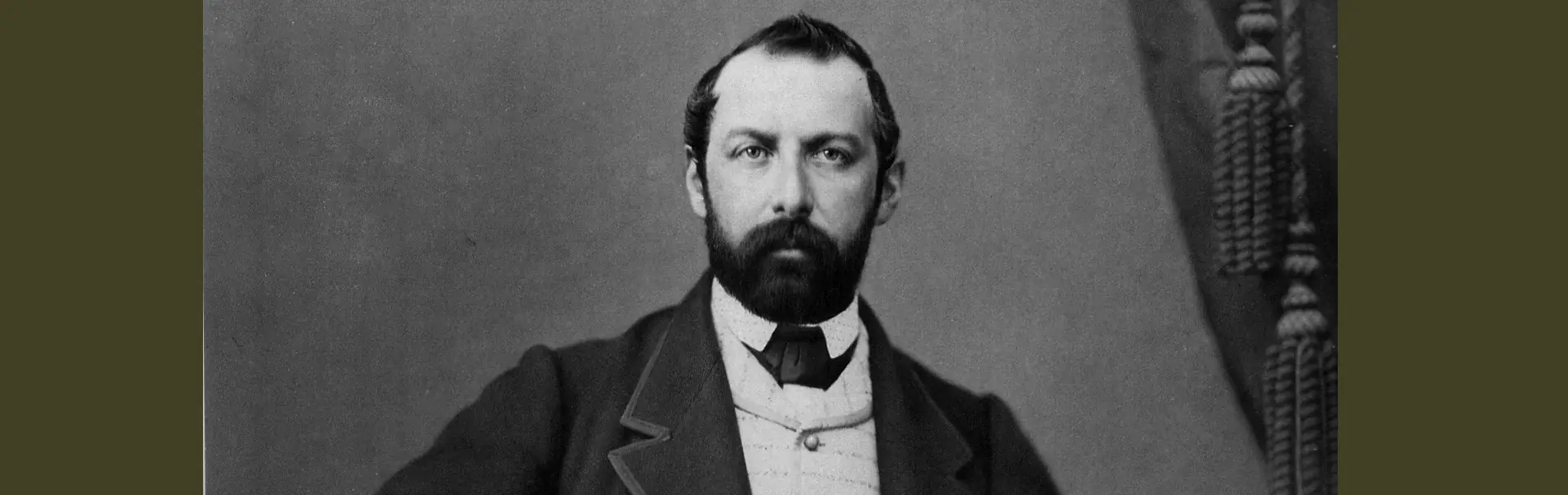
The dynasty’s reform momentum began with Oscar I, whose progressive policies strengthened civil rights and laid the foundations of the modern welfare state. His son, Karl XV, brought a charismatic and culturally engaged presence to the throne, championing the parliamentary reform of 1866 and shaping a new sense of national identity. Karl XV brought a charismatic and culturally vibrant reign, championing the parliamentary reform of 1866 and shaping a new sense of national identity in Sweden and Norway. The era culminated under Oscar II, the last Swedish monarch to wield political power, who guided the country through industrialisation, diplomacy, and the peaceful dissolution of the union with Norway.
Across Stockholm, the legacy of the Bernadotte kings remains visible in the palaces, churches, and cultural institutions that defined their reigns. From the ceremonial halls of the Royal Palace to the royal burials at Riddarholmen Church, the city offers a living map of the monarchy’s evolution during this transformative century.
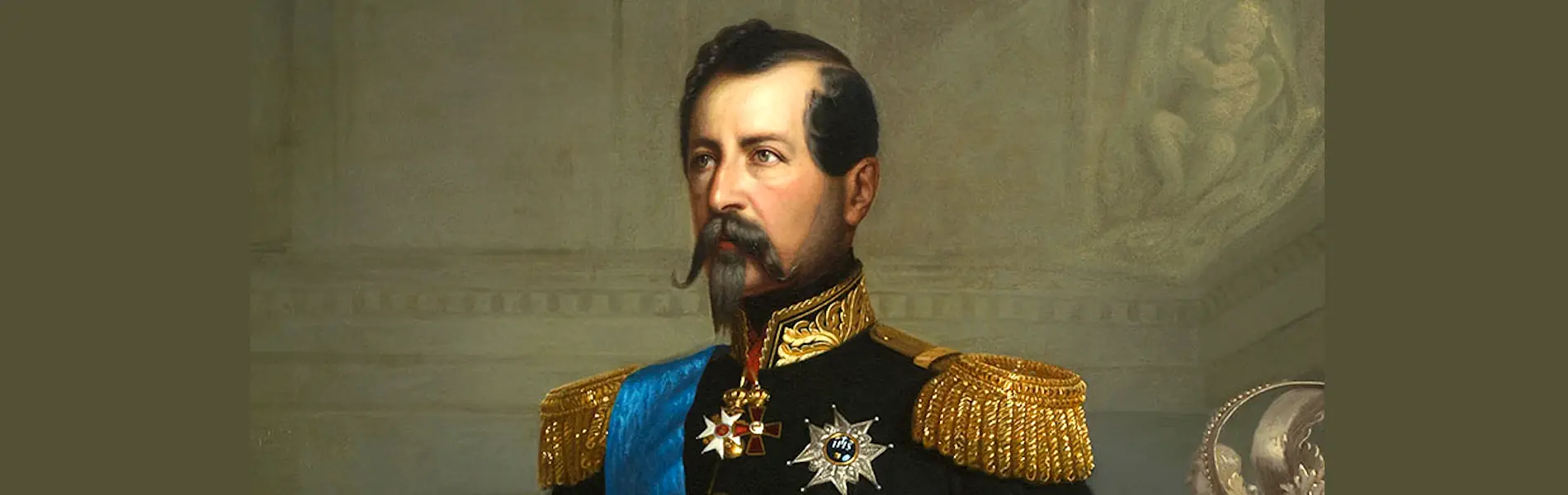
Visitors exploring Stockholm today can easily trace the evolution of Swedish monarchy through its historic landmarks.
Within the medieval streets of Gamla Stan stand the Royal Palace, Storkyrkan, and the remains of Tre Kronor. Across the water lies Riddarholmen Church, the resting place of Swedish kings. Beyond the city center, Drottningholm Palace offers a glimpse into the private world of the modern royal family.
Together, these sites form a unique historical landscape where royal history remains embedded in the architecture of the Swedish capital.